

by Moody Simmons, on Jul 17, 2026, 10:52:50 AM
Germany’s 1941 invasion of the Soviet Union is one of the greatest planning blunders of all time.
The Germans underestimated the operational hours needed to cross Russia, ignored inadequate infrastructure, and failed to account for the harsh winter weather. These three errors took a massive toll on their equipment, supply lines, and personnel. As a result, what they anticipated being an overwhelming victory turned into a catastrophic defeat.
The lesson: A failure to plan is a plan to fail.
You aren’t engaging in a land war in Asia, but anticipating reality is still vital. Working hours, infrastructure, and climate all affect your forklift’s health. If you wait for something to break, you’re gambling with mission-critical equipment and courting failure.
Scheduled maintenance prevents costly interruptions that threaten success.
This proactive approach to forklift service prevents disruptive breakdowns before they happen. Instead of waiting for the plan to fall apart as the Germans did, you build maintenance and repair into your plan to ensure that equipment failures never become productivity killers.
Building scheduled maintenance into your operational plan is easy with this five-step framework.
Scheduled Maintenance vs. Reactive Forklift Repair
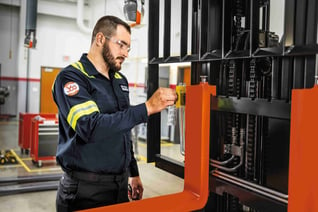 Before we outline those five steps, let’s clarify the difference between scheduled maintenance (SM) and reactive maintenance.
It’s easy to confuse the two because some forklift repair does occur during SM. The difference is timing. Use causes wear and tear on all forklifts. That wear accumulates until it is addressed. Reactive maintenance delays repairs until a critical failure occurs, threatening an imminent breakdown. Now, you must address a large, expensive issue.
Early intervention prevents breakdowns.
Given enough time, even a small leak can stop your truck in its tracks. That’s where SM steps in. A scheduled maintenance plan tackles small repairs before they become big problems.
In other words, SM fixes minor issues now so you don’t have to resuscitate your forklift later.
The 5 Steps of Forklift Service and Repair Planning
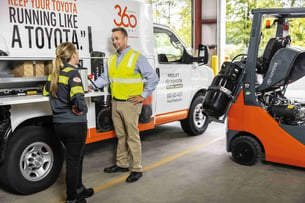 Fork truck repair isn’t an isolated incident.
It’s a reality that affects your operation’s big picture. Yet, the dread of a repair bill can easily obscure that high-level view. This framework steps back from the minutiae and reveals how SM fits into the big picture, saving you money by reducing downtime and extending your forklift’s lifespan.
It all starts by clarifying your forklift’s health.
Step 1: Classify the Issue
There are three triggers for forklift service.
OEM Guidance. Ideally, SM occurs before any noticeable issues. OEM guidelines list service intervals intended to maintain the forklift before failures occur. Each forklift part has its own lifespan based on service hours. Pushing parts beyond their designed lifespan causes failures. As a result, estimated part lifespans determine service intervals. Typically, that means SM every 200-250 working hours, but OEM recommendations vary.
Early Warning. Small leaks, odd noises, and performance changes are the first signs of impending equipment failure. These relatively minor issues will escalate if left unattended and should trigger a repair call. While these can occur on any forklift, they are most common in those with inconsistent maintenance.
Reactive Repair. The final and most serious trigger is when your forklift breaks down. At this point, mobile forklift repair is the only option. Our field service team can get your forklift back up and running fast. However, a reactive repair is always more expensive than a proactive one since you’re paying for the service call and the lost productivity.
Your goal should be to catch as many issues as possible at the OEM guidance and early warning stages.
Step 2: Time Service Based on Usage
Forklift usage determines maintenance frequency.
Since working hours determine maintenance intervals, the intervals between service calls vary with forklift usage. A forklift that runs one eight-hour shift, Monday through Friday, may only need service once a month. However, that same forklift running three shifts may require service every two weeks.
Bear in mind that most SM visits are more concise than reactive repairs.
By staying on top of maintenance, there is less to do at each visit. Consequently, the technician finishes the job faster. While the billing may be more frequent than reactive repair, the total cost and disruption are much less.
Our SM plans follow hour-based service guidelines, ensuring your service intervals match your usage.
Step 3: Fix Small Problems Early
A quality maintenance plan gives you as much control as you want.
Some managers prefer maintenance plans that require approval for even routine repairs. With these plans, the technician inspects the forklift, gives you their recommendations, and makes the repairs you approve. This back-and-forth keeps managers in the loop but adds an extra step to each service call.
Some budget-conscious managers choose this option to prioritize some repairs over others.
Your technician may indicate that some repairs are more urgent. However, ignoring minor repairs is a mistake. As discussed above, small issues become big problems. It is far better to fix all the issues your budget can support than to wait. You may initially spend more than you planned on a call, but it will still cost less than a future major repair.
If you have a high-usage fleet, consider a full maintenance service plan to cover the cost of frequently replaced parts.
Step 4: Evaluate the Total Service Cost
Too often, managers think of parts and labor as the total repair cost.
However, a breakdown causes much more financial disruption. Very few operations keep extra forklifts in their fleet. So a downed forklift means a break in workflow. Consider the following hidden expenses:
Lost productivity. A downed truck means an operator with nothing to do who is still logging hours. Other forklifts have to pick up the slack, which slows throughput and leads to expensive overtime.
Repair delays. Breakdowns are unexpected. When several facilities experience breakdowns simultaneously, emergency repair queues can stretch for days. Consequently, a one-day repair may take a week to complete.
Safety impacts. The loss of a vital forklift increases the pressure on the whole team. With fewer resources, they must work harder and faster to achieve their productivity goals. That stress leads to operator errors and risky behaviors that result in serious accidents. Just imagine adding the cost of an OSHA fine to your repair bill.
Your forklifts are a vital cog in the machinery of your business. When they break down, they cause cascading difficulties that add up quickly.
Consider the total cost of repair before delaying service.
Step 5: Track the Right Metrics
Zero forklift repairs is an unrealistic goal.
Even the most comprehensive SM plan can’t protect against random occurrences, such as human error. Instead, track more meaningful metrics such as:
- The total number of major breakdowns
- The duration of downtime events
- Forklift service life
- Maintenance cost fluctuations
A reduction in breakdowns and downtime duration indicates a successful SM plan. Likewise, extending your forklift’s service life and stabilizing service costs help track SM ROI and ensure you get the most for your investment.
Tracking the right results offers the best evaluation of SM success.
Toyota Forklift Service Made Simple
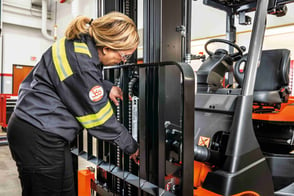 Our five-step framework illuminates the big picture, but the details persist.
Scheduling, budgeting, part acquisition, and many other elements affect the success of an SM plan. You don’t need all that on your plate. Make it our responsibility instead.
Our tiered scheduled maintenance plans offer you the coverage you need at a predictable price, making budgeting easy.
Our expert service team plans visits around your schedule so maintenance never disrupts productivity. Additionally, our certified technicians handle all the logistics, arriving on-site with common replacement parts and necessary tools.
SST service keeps your fleet running on your schedule without the hassle.
Contact us online or visit one of our locations to learn more about our scheduled maintenance plans:
Florida
Jacksonville
Lakeland
Ocala
Orlando
Tampa
Winter Haven
Georgia
Albany
Macon
Columbus
Valdosta
Further Reading
Which Forklift Service Plan is Right for Me?
We Can Fix That: A Short List of Everything We Service and Repair
3 Money Saving Reasons to Follow Your Forklift’s Service Schedule