

by Theodore Taylor, on Jun 9, 2026, 6:03:08 AM
Forklift accidents fell by 70% since the introduction of forklift certification.
Before May 29, 1971, OSHA did not have a standard for forklift certification. To better protect their staff, warehouse managers had to voluntarily adopt best practices published by other organizations. The absence of a uniform standard didn’t reflect an uncaring industry. It simply lagged behind the popularity of forklifts, which spiked following World War II.
We are in a similar lag period for lithium-ion batteries.
Lithium-ion battery popularity continues to grow. Just like forklifts, their popularity advanced ahead of unified standards for handling and storage. In fact, the first regulations for lithium-ion battery storage appeared in the latest update of NFPA 855. Until regulating bodies develop universal safety standards, it falls on forward-thinking industry professionals to promote established lithium-ion forklift battery best practices.
Read on to learn how proper lithium-ion battery handling and storage protect your team and facility.
Lithium-Ion Battery Hazards
Lithium-ion batteries are (nearly) maintenance-free, not hazard-free.
Like all power sources, lithium-ion batteries are hazardous to workers and property when mishandled. These hazards differ from lead-acid batteries but are manageable with proper precautions. However, they can be catastrophic when ignored.
Fire Risks
Lithium-ion batteries have high energy density.
In other words, they generate a lot of energy in a relatively small space. That’s why they tend to be smaller and lighter than other battery types. This offers an advantage in many material handling settings, but it also presents a hazard.
Because of the high energy density, thermal runaway can cause explosions and rapidly expanding fires.
Damaged lithium-ion cells release heat, triggering a chain reaction of overheating. This is thermal runaway, and the heat generated by this reaction can ignite the entire battery. Burning batteries spread fire quickly. As nearby materials combust, the heat within the battery ejects burning cells. These cells either ignite or explode.
Worse, extinguished lithium-ion battery fires pose a significant risk of reignition.
Chemical Exposure
Even without ignition, damaged batteries can generate harmful chemicals.
When electrolytes leak from a battery, they can react with moisture, producing acidic substances. Additionally, gas-off can spread other toxins contained within the battery. These substances vary depending on battery chemistry. However, common toxic substances include:
- Chromium
- Lead
- Carbon monoxide
- Thallium
Exposure to these can cause dangerous symptoms such as vomiting, shortness of breath, seizures, and coma.
Like the fire risk, chemical exposure can be deadly to your associates.
Industrial Battery Safety
Damaged lithium-ion batteries pose the greatest risk.
Faulty manufacturing and short circuits are sometimes the cause of this damage. However, poor storage and mishandling are more frequently the culprit. Consequently, proper handling is essential. In 2024, the National Fire Protection Association (NFPA) updated NFPA 855 to provide guidance on the storage of lithium-ion batteries. This update offers excellent storage standards, but safe handling requires additional best practices.
The safety of your staff and facility depends on these precautions.
Lithium-Ion Battery Safety Precautions
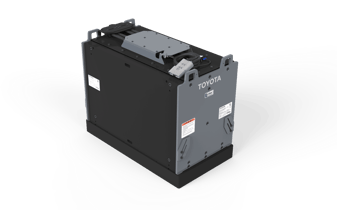 Lithium-ion battery handling varies depending on battery chemistry.
Always defer to the manufacturer for specific storage and handling guidance. However, there are a few common best practices:
- Lithium-ion battery storage. Store batteries in a cool, dry location. Temperatures exceeding 130 degrees or below 32 degrees will damage most lithium-ion batteries.
- Fire protection. Follow NFPA standards for fire protection. This includes appropriate fire extinguishers, fire-rated metal doors, sprinkler systems, and ventilation systems in lithium-ion battery storage areas.
- Lithium-ion battery charging. Never overcharge batteries. Always follow the manufacturer’s instructions when charging to prevent accidental damage.
- Battery management system. Look for lithium-ion batteries with a battery management system (BMS). These systems monitor the battery for defects, helping prevent thermal runaway.
- Maintenance. Follow the manufacturer’s instructions for battery and charger maintenance. Additionally, ensure forklifts and any other equipment that uses lithium-ion batteries are properly maintained.
- Battery inspection. Just like other equipment, always inspect a lithium-ion battery before use and charging. Remove it from service if you notice any damage.
- Disposal. Only dispose of lithium-ion batteries at an appropriate recycling facility. Never send them to landfill.
- Training. Train all relevant staff on lithium-ion battery handling, storage, and disposal.
Following these best practices greatly reduces the likelihood of a battery failure.
Early Warning Signs of Danger
Lithium-ion battery damage happens, even in diligent facilities.
There are three major types of battery damage:
- Mechanical. Damage can occur if the battery is dropped, crushed, punctured, or exposed to moisture.
- Electrical. Using incompatible chargers or other equipment is a common source of electrical damage. Improper charging can also cause damage.
- Thermal. Exposure to extreme temperatures causes thermal damage. Overheating, extended periods in direct sunlight, or freezing conditions are common causes.
Any of these damage types can lead to fires or chemical exposure.
If you suspect a battery may be damaged, look for the following:
- Swelling
- Rising temperature
- Unpredictable behavior
- Discoloration
- Smoking
- Hissing
- Leaking
- Failure to hold a charge
- Strange odors
All of these are early warning signs of battery failure. If you notice any of them, remove the battery from use, isolate it from flammable materials, and contact the appropriate waste management facility.
Never try to repair a lithium-ion battery yourself.
Lithium-Ion Battery Safety Experts
There is no such thing as safe material handling equipment, only equipment made safer through training.
Lithium-ion batteries are no different. With proper care, these batteries can revolutionize your facility. However, proper care requires expert advice. That’s where we come in. Our solutions team has the latest battery-handling best practices and safety tools to protect your staff and facility. If you’re thinking about making the switch to lithium-ion or already use lithium-ion batteries, let our experts help you maximize safety and productivity.
To learn more about electric forklifts and forklift battery safety, contact us online or visit one of our locations:
Florida
Jacksonville
Lakeland
Ocala
Orlando
Tampa
Winter Haven
Georgia
Albany
Macon
Columbus
Valdosta
Further Reading
Get the Most Out of Your Forklift: Battery Care 101
A Sustainable Future Demands Industrial Battery Recycling
Forklift Batteries 101